A few points i would like to remind everyone who criticizes rms.
1) rms is a radical guy. You cannot change that. He fights for what he thinks is right. He is not the kind of person you can ask to censor himself.
If he thinks u.s goverment is to blame for 9/11, no matter how saying it in a lecture seems childish, he will say it.
If you invite rms for a lecture, he is coming with his radicalism. That is to be expected. You cannot invite rms and expect steve jobs.
2) rms is a practical guy. stop acting like he's a mad man who knows nothing. He started GNU, wrote emacs, glibc, gcc and probably others. He created the concept of free software and wrote a license as good as GPL to defend it.
He also managed to gather a community around this very crazy idea of free software.
3) rms doesnt want people only to use free software. he wants people to value their freedom, and as a result of that, use free software.
It doesnt really matter if whole world uses android instead of ios. The point is, these days, most people involved in open source community, do not even care about free software and the freedom it offers.
Most people are interested in technological advancements or affects of an open source project on market. None of them are concerns for rms.
And, what i said above is just what i interpreted from his actions and are not facts.
What I feel, and what I suspect many others feel also, is that however much this might be true, it's the way that RMS presents these views to the public that instantly marginalises him and the FSF.
Were he to choose not to mention 9/11 conspiracy theories, or to not act in a way that marginalises the movement; it's quite likely that it would alienate fewer people and be generally more successful.
It's great to have a leader who is genuinely passionate about what he's doing, but for others who might agree with much of what he says, it can be disheartening to see so many turned away by some of the rhetoric.
The author (and his those who agree with him) are not asking Stallman to censor himself. On the contrary, they are asking him to express himself more effectively.
> If he thinks u.s goverment is to blame for 9/11, no matter how saying it in a lecture seems childish, he will say it.
By the way he doesn't believe that. Last time I read about his opinion on the subject he said that proofs were lacking on both sides (truther and non-truther) but that it was probably the work of religious fundamentalists (either christians or muslims).
To be honest, if he believes that 'proofs are lacking on both sides' then I've just lost quite a significant amount of respect for the man.
If the 'truthers' are correct then many hundreds, if not thousands, of people decided to conspire to murder thousands of innocent civilians and, somehow, managed to prevent any leaking of this whatsoever.
On this basis alone, the idea that 9/11 was a conspiracy is insane, before we get to the fact that, as with all other conspiracy theories, there is just no evidence whatsoever (though the 'truthers' require an unattainable standard of proof from reasonable people, despite requiring none for their own beliefs) then the idea that there is 'no proof' on either side is equally unhinged.
If you can't think clearly on something so clear and obvious then it really draws into question your reliability on any subject, especially if you are 'preaching' on the subject.
I'm sorry, you just have to draw the line when you're talking about the murder of thousands of innocent people. Seriously.
That always happens with people who voice their opinions on everything. There is always going to be a deal breaker.
We all have extremely conflicting opinions with others. You have to consider every issue and not the man so much.
He's the way he is. I agree with him in many points. In some very impopular issues I agree with him (not the "inside job" thing though). What I wouldn't do is come out in lectures with that kind of stuff. Political correctness is sadly a need when you stamp your real name on something.
Now, I think the FSF is right about basically every single point it's active on. That's what matters to me. I agree it's approach might be sometimes lacking, and I think RMS himself should step down and go back to writing software. Which is why I donate to the EFF instead, and I think it's pretty awesome.
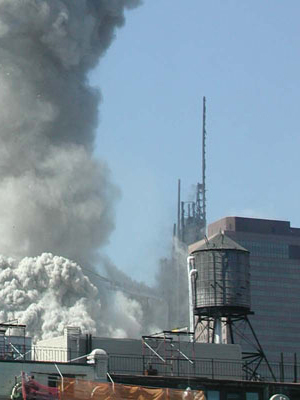
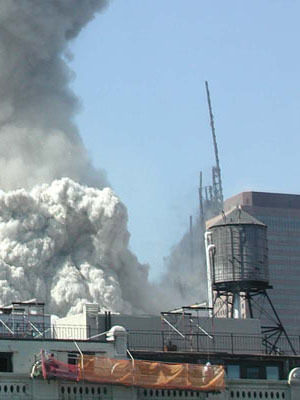
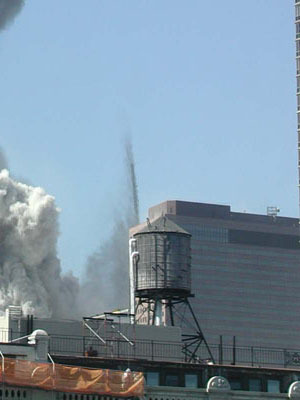
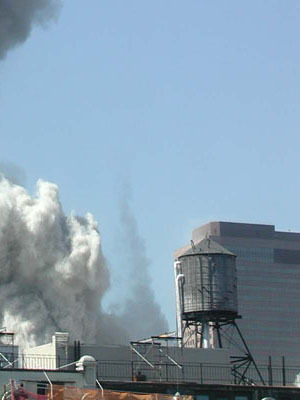
You can say what you want, but I find seeing the type of massive steel beams used in those building turning to dust and blowing away in the wind in just seconds very, very odd. Were does the energy come from? Especially because the steel to which this is happening is 'standing alone', seemingly untouched, suddenly going 'poof'..!?!
Not saying that I agree with the described causes on that web page.. but I am quite certain it isn't caused by a plane crash an hour or so earlier.
Sigh. No disrespect intended, but you could spend the rest of your life arguing this stuff, just like any other conspiracy theory. But I'll bite this once so it doesn't look like I'm 'ignoring' your 'evidence'. I won't respond beyond this.
You can't argue against the fact of what would be required for this to actually be a conspiracy, that is concrete and vital to the contention that it wasn't what it appeared to be. You have to explain that, or otherwise we have nothing to talk about.
Remember - extraordinary claims require extraordinary evidence. 'This is weird' does not count.
But... I'll carry on for the sake of it. Saying things looking 'weird', or 'how do you explain x?' is meaningless - yeah, weird stuff happened, so what? In many scientific experiments 'weird' stuff happens that can't be explained, that's the way it is - nature is just a strange beast and weird stuff happens, despite us being able to determine the truth of the core matter. Ask any experimental scientist about this.
That is, of course, assuming there is any truth or validity in the 'evidence' provided which I really can't be bothered to look at, as I have n number of seconds left to live in my life, 0 of which I want to spend reading crank bullshit.
I recommend in future you google both for and against ridiculous claims made with little to no evidence.
The crux of the matter is - did planes strike the buildings and cause them to collapse? The answer is yes, unless you believe the vast majority of competent engineers (note there are many engineers + architects who are also conspiracy theorists - also note my reference to 'competent' - there are plenty of incompetents and nuts in every walk of life, engineering + architecture being no different) and scientists out there who accept the cause of collapse are conspiring to lie too, in which case you may as well abandon any attempt at reason whatsoever because the whole world is just utterly one endless conspiracy.
On a personal note - I am a Civil Engineering graduate from one of the best CivEng departments in the world (Imperial College, London). I remember discussing the collapse with a professor of structural mechanics and he had no problems with the mode and cause of collapse whatsoever. I make this, not as a resort to authority, but rather pointing out that you, yes you have to explain why he could not work out what this internet randomer could.
The simple fact is that you can cling on to all sorts of 'weird' goings on as evidence of all sorts of strange theories, however several points remain the case:-
1. To prove point X, you don't need to explain every weird apparent occurrence Y and Z, you only have to prove point X. If this was not the case, experimental science wouldn't really have made much progress over the years.
2. If you make an extraordinary claim that utterly contradicts point X, you need to provide overwhelming evidence to back that up - saying 'oh isn't Y and Z weird?' isn't really sufficient.
3. Random shit off the internet doesn't count as 'evidence'.
I'd ask you to consider what we're talking about here - the murder of thousands of innocents, and I'd like you to ask yourself whether your not having even bothered to google for opposite points of view (took me all of 10 seconds), or considering whether that evidence is valid or sufficient to discredit the 'mainstream theory' is in good taste, or actually in essence quite offensive.
I'll keep it short too because I agree that you can keep arguing things for the rest of your life.
- I just find it odd that Dr. Jones doesn't count as some 'internet randomer' for you while someone with an opposing theory with similar degrees does (Dr. Judy Wood).
- If you have to prove point X that was accompanied with weird occurrences X1 and X2 with theory Y. Theory Y is not complete until it can fully proof point X, /including/ its weird occurrences. Until that point, theory Y might be a good explanation, but never a complete one.
- Completely ignoring oddities and weirdness in an event where thousands of innocents died, that's what I call offensive. If things like surviving passports, hijackers that are still alive, engine blocks melting and cars rusting in no-time at blocks away behind other buildings and 100's of other strangeness and coincidents don't give you ANY gut feeling to look beyond the official story then I'm sorry it's not a University course.
- I agree that a whole lot of 'evidence' on alternative sites is false. But I'm not mentioning these sites so don't try to associate me with those. I mentioned a few things that /I/ find odd, nothing more, nothing less.
Two final points:
- I'm not saying that the (US) government did it, but if you have any historical knowledge, you know that governments have and will definitely sacrifice some of their citizens if the things they can gain with it are worth it.
Unpleasant to think about: hell yes!
A reality: very sadly yes!
- You probably have never looked into the more alternative physics and their horrific weaponization potential. Think the work of people like Tesla, the super-classified research done by the Soviets, the Nazi's, etc. Stuff you can find discussed by 'non-kooks' if you look for it.
If you come from this perspective of history and alternative weapons research, the signatures of such technology could fit many of the things seen like a glove..
Conspiracy theorists are assuming the conclusion before the evidence is in place. You know just like religious people can make anything seem like an act of god. Or believers in Nostradamus make everything seem like he was right. The list of alternatives stories one can make in retrospect is more or less limitless.
If you have already decided that the government are conspiring against their citizens then you will take any weird phenomena and use that as an argument for you case.
But you could might as well make another conclusion far less spectacular yet as horrific. For instance that the US government knew something was going to happen and they let it happen.
This would be a far less outrageous claim to make even though it's really pretty much wrong.
Conspiracies look like those that Wikileaks expose once in a while. They aren't well orchestrated, they aren't masterminded, they are messy, with lot's of potential leak risk and more importantly they are very small in scale.
Yet wikileaks have managed to get a hold of that.
One would think that if there are people who leak videos of US pilots shooting down journalists, there would be people leaking a far greater story, requiring a far larger conspiracy involving thousands if not hundreds of thousands of people.
One would also think that if the government really was that great at covering up something a huge as 9/11 then they wouldn't make stupid mistakes like the ones that the conspiracy theorists seems to attach themselves too.
In fact one would think that if they made such fundamental mistakes as those that seem to be used as a proof for the conspiracy then the likelihood of the conspiracy being leaked would increase by many many factors.
Unpleasant to think about? Yes for the conspiracy theorists.
"Conspiracy theorists are assuming the conclusion before the evidence is in place. You know just like religious people can make anything seem like an act of god. Or believers in Nostradamus make everything seem like he was right. The list of alternatives stories one can make in retrospect is more or less limitless."
I completely agree with this.
"If you have already decided that the government are conspiring against their citizens then you will take any weird phenomena and use that as an argument for you case."
I also agree completely with this point. I also want to make it very clear that I have not decided that the government is conspiring against their citizens, nor is it my starting point.
It is however not something that can be ruled out from the start either, as I mentioned, history has proven that too.
"But you could might as well make another conclusion far less spectacular yet as horrific. For instance that the US government knew something was going to happen and they let it happen."
Agreed, there are so many shades of gray between the often official/'truthers' dichotomy that is almost always maintained and promoted.
Once again to be explicit: I'm interested for the correct shade of gray, because the official version doesn't do it for me, but most alternatives are complete non-sense too.
"This would be a far less outrageous claim to make even though it's really pretty much wrong."
At least the government messed up by ignoring too many signals in the months leading up to the day and by acting to slow on the day itself. Having a training with almost the exact same scenario on the same day doesn't help. This also applied to the attack in London.
"One would think that if there are people who leak videos of US pilots shooting down journalists, there would be people leaking a far greater story, requiring a far larger conspiracy involving thousands if not hundreds of thousands of people."
Not necessarily. Large groups of people can work on a common goal while still keeping it secret. See e.g. the Manhattan project with 100K people working on it.
"One would also think that if the government really was that great at covering up something a huge as 9/11 then they
Unpleasant to think about? Yes for the conspiracy theorists."
As I noted in another reply in this topic: conspiracy theory is also a word that's used to create false dichotomies.
The official version is also a conspiracy, the conspirators being those Arabic hijackers (of whom quite a few are still alive too btw).
So the real issue isn't: is it a conspiracy or not
It's: who are the conspirators and how can everything observed that day be explained.
The Manhatten Project wasn't a conspiracy any more than the CIA is a conspiracy. And the Manhatten Project is pretty well documented and would be carried trough with each new president in the know. Plus The Manhatten Project wasn't done against Americans.
If you are comparing those two projects as equals then you are basically insinuating that Obama must know about this project and is keeping it a secret?
Otherwise it's pretty obvious that you are trying to build an argument out of basically nothing.
You are simply proving my point. You are claiming there are conspirators. Unless you are willing to assume the likelihood that there aren't any, that pretty much means end of any meaningful debate from my point of view.
"The Manhatten Project wasn't a conspiracy any more than the CIA is a conspiracy. And the Manhatten Project is pretty well documented and would be carried trough with each new president in the know. Plus The Manhatten Project wasn't done against Americans."
He was not claiming that the Manhattan Project was a conspiracy, or a conspiracy against Americans. He was only citing it as evidence that a large number of people can work together in secret.
"If you are comparing those two projects as equals then you are basically insinuating that Obama must know about this project and is keeping it a secret?"
Again, not claiming the Manhattan project was a conspiracy. No reason to bring Obama into the argument.
"Otherwise it's pretty obvious that you are trying to build an argument out of basically nothing."
I think that he cited fairly clearly that there is evidence that is not "basically nothing" that he finds suspect. See the links that he posted.
"You are simply proving my point. You are claiming there are conspirators. Unless you are willing to assume the likelihood that there aren't any, that pretty much means end of any meaningful debate from my point of view."
No, he isn't proving your point. What he is stating is that in most explanations, whether the official or the truther's, there are conspirators. In the official version the conspirators are middle eastern terrorists.
Only problem is that a large number of people didn't work together in keeping a secret.
Very few knew what it even meant and it was all documented and known by parts of the government. A government in war btw. A secret weapon that was not used against it's own people.
So it's pure brute forcing unrelated events in a attempt to make something completely unrelated look like it's the same.
But I have no doubt that the next time around hitler will be used as part of the argument to show that a leader can blind his people to believe in anything using the news outlets as his propaganda machine.
Only problem is that we don't live in 1948 or 1984 for that matter.
"Only problem is that we don't live in 1948 or 1984 for that matter."
You forget one thing: human nature hasn't changed that much.
There are still plenty of modern examples of leaders that are blindly followed by people. E.g. cults, certain countries, etc.
Perhaps the risk of this happening in the West has gone down, but it's still there.
Do not underestimate the power of TV and the like.. and do not forget how fear is an effective method to sweep people into action. Perhaps not invading other countries.. but things like body scanners and privacy invasions are common place now.. why? fear + media outlets = powerful.
"Very few knew what it even meant and it was all documented and known by parts of the government. A government in war btw. A secret weapon that was not used against it's own people."
It's not brute forcing. You can place many people in their role and position, letting them do their job honestly without any need for them to have any clue at all about the greater scheme.
(This would probably apply more to the government scenario than to other scenarios, but for sake of the examples..)
Simple examples, more elaborate ones can easily be thought of with a bit more time:
Did the person giving the hijackers pilot training play a role that day? definitely!
Was this person to be blamed? in the know? no!
Doing his/her job in good faith and with honesty? yes!
What about those people scheduling an air force training that day, causing many planes and pilots that normally defend the NY airspace to be away from the area?
(assuming this was a 'purposeful move in the 'allowed to happen' scheme or something)
They were just following orders. Training pilots regularly is a good thing to do right? Who can predict that the lack of defensive capability that day would be such a bad/tragic timing? The people actually organizing the training? No! Would the pilots moving to a training need to be in the know? No! Can they be blamed? Not at all, but they might regret not being at their home base.
Just a couple of people in strategic places can move all the 'pawns' (not meant derogatory in any way!) to the correct place and time for the greater strategic (chess) plan to work / allowed to work / insert possible variations here.
These 'pawns' would often truly believe that they are doing their job to the best of their abilities and not be able to see any 'evil' in what they are doing.
Hope what I'm trying to convey is somewhat clear.
Once again, these examples are easier to make for the 'government scenario'.. which is not something that I fully support.
To be honest: I really don't know what really happened that day. I don't have a definitive answer that I want to 'push on to others'. I only know that the official story is something with too many holes and too many strange coincidences for me.
In other words you assume that those holes must be the evidence of a conspiracy. Why not just be honest about it? I have met so many of your kind with exactly the same arguments. At the end of the day you think there was a conspiracy. But instead of being honest about it you simply hide behind vague insinuations.
You have answered none of my arguments. Basically you think that most people are idiots being fooled by some clever evil leaders through the use of propaganda. Each and every of your posts illuminates that more than anything else.
"In other words you assume that those holes must be the evidence of a conspiracy. "
No, once again, I'll not allow you to corner me because of my examples with which I'm trying to explain that the events as they happened could be explained BY a conspiracy and they could JUST AS WELL be explained by it NOT being a conspiracy..
"But instead of being honest about it you simply hide behind vague insinuations."
I mentioned before that I don't claim to know what happened that day. Only that I have unanswered questions or things that are not explained sufficiently for /me/. If you're happy with your views on that day, good for you.
Is it now allowed to NOT have a position these days? Many people don't hold multiple theories/world views/models in their mind at the same time, keeping all of them open while gathering more information.
I can't help that most people directly follow either the mainstream/official approach OR the alternative approach.
Once again: the world is not black or white, 'not with us or against us', etc
"You have answered none of my arguments."
And apparently you just don't get that my points are examples.. not my opinions..
"Basically you think that most people are idiots being fooled by some clever evil leaders through the use of propaganda."
I'm not saying that. I'm just saying that propaganda nowadays would work just as well and insidiously as 60 years ago. And people don't have to be idiots for this to function, two words: human nature
And if you can't see how at least the whole situation was used to 'force through' all kinds of executive orders, laws and regulations and the creation of the Homeland security thing, I'm really sorry for you but then you've missed a few things that have changed in the world since that horrible day..
"Each and every of your posts illuminates that more than anything else."
I'm not a 'truther' and I'm not a 'mainstreamer'.
That day is still very open-ended because of it's complexity of events.
I don't have a position, deal with it. And most of all, don't try to push me into that 'elitist' corner stating that I'm calling people idiots, fools whatever.
I'm generating scenarios and examples and I'm being realistic with what we've seen in human history and human nature/psychology.
So just stop trying to label me and put me in one of those two convenient boxes you have in your mind: normal/mainstream or truther/kook.
if we're talking about the murder of thousands of innocent people, investigating about this thing matters all the more.. just because it's not likely, doesn't mean it's impossible.. 'proofs are lacking on both sides' isn't conclusive to rule out that possibility..
OK, hundreds would be impossible and silly, but why would it take hundreds? Suppose Cheney decided by himself to let the attacks happen, could he have, without anyone catching on? If not he alone, who else would be needed? No more than five surely.
Discounting a conspiracy as impossible is just as silly as arguing a conspiracy of hundreds. Improbable, yes, impossible, no.
Suppose Cheney decided by himself to let the attacks happen, could he have, without anyone catching on? If not he alone, who else would be needed? No more than five surely.
No, because the people at the top are not the ones who do the work. They set policy, and sometimes directly tell people what to do - but, more often, they tell people who then tell other people what to do. If a conspiracy is going to involve the top of the chain - and it should be pointed out that the VP is technically not in the chain of command - then it's going to involved dozens, if not hundreds of others if the conspiracy is actually going to do something effective. And in that case, there will be enough written down that eventually it will out. See, for example, the Iran-Contra affair.
An excellent account of both what the critical points for intervention were, and what happened on the day is "The Ground Truth": http://www.amazon.com/Ground-Truth-Untold-America-Attack/dp/... The title has unfortunate "truther" connotations, but it comes from a term the aviation industry uses to establish what happened after a crash. They use first-hand material and evidence to establish the "ground truth" of the crash, and from there try to extract lessons. The author does exactly that, using primary sources exclusively - such as recorded conversations between air controllers - to determine the sequence of events.
It seems to me that you're conflating two assertions: 1) the original, "the US was behind the 9/11 attacks", and 2) your offered alternative, "the VP and a handful of others had specific, actionable information on al Qaeda's attack and did nothing to stop it". The two are not the same, and the preceding comments were made regarding the first.
In either case discounting a conspiracy as impossible isn't silly if there's no evidence of said conspiracy nor even a plausible hypothesis of how such a conspiracy could have worked. The onus of proof is on those proposing a conspiracy, not on everyone else to prove a conspiracy didn't occur.
> ... proofs were lacking on both sides ... religious fundamentalists (either christians or muslims).
These are equally ridiculous statements. We know who did it, we know how they did it, we know why they did it. People just can't accept that enormous events can have relatively simple causes.
While I think the intelligence agencies were just incompetent to identify the proper threat, perhaps for lack of an adequately warped imagination (911 was a game changer in the rules of plane highjacking - nobody ever used a passenger plane as a missile before), I don't think anyone allowed it to happen on purpose.
However, the president and his associates certainly saw the opportunity and ran with it. The damage done will take decades to undo.
"911 was a game changer in the rules of plane highjacking - nobody ever used a passenger plane as a missile before"
True for civilian planes, but it stretches the imagination a little too far that the US military could discount planes as missiles, given the precedent of pearl harbor.
To the extent this is a possibility, it's more likely they didn't know exactly what 'it' was going to be, and were expecting something comparatively minor.
Saying 9/11 was the work of Christian fundamentalists seems nearly as bizarre as claiming it was the work of the government. Neither has any grounding in fact.
You and many, many others need to start providing citations for these claims of what "he said." If you heard it, there's probably a citation somewhere about it.
I like Emacs; I've been using it for 30+ years and I thank RMS for inspiring the commercial Emacs clone I use today. Pretty much everything else he's done: Whatever.
My personal interactions with RMS have drawn me to the conclusion that he's just a smart asshole, and a little crazy. Steve Jobs is like that, too. The difference is, I would jump at a chance to work with Jobs.
There are a few commercial clones. I use Epsilon (by Lugaru Software) because I think it's faster and behaves more reasonably on Windows than Gnu Emacs, and I'm used to it.
"even if you believe that the government had nothing to do with the attacks of September 2001," - could well be blaming foreign policy of previous governments, not theorising about conspiracies.
I always wonder why conspiracy theory has become such a loaded phrase, people conspire in secret, other people theorise about it, I don't really see the problem.
Curiously enough, if there were secret cabal(s) running the world, it would clearly be in their interest to marginalize "conspiracy theories". Either way, it's classic a priori.
> 2) rms is a practical guy. stop acting like he's a mad man who knows nothing. He started GNU, wrote emacs, glibc, gcc and probably others. He created the concept of free software and wrote a license as good as GPL to defend it.
He created the concept of 'Free' (note the capital F) software as his definition of free. People were sharing source code beforehand. The source to Unix was available under licence, there were plenty of tools available (ISTR TECO, EMACS' predecessor being open source for example) with source. I can create a definition of something that distorts other peoples' views of the truth and misappropriate it as my own.
Secondly, he wrote all of those things as part of his GNU OS, which he never finished. As someone who's written hobby OSes before I can understand that GNU was a massive undertaking, but he's not the only guy ever to write an OS and deserves no more kudos for it than the BSD guys or any other OS developers. He is not some magical wizard of software freedom.
> 3) rms doesnt want people only to use free software.
This[1] article by a certain Richard Stallman on gnu.org begs to differ. Maybe it's a different Richard Stallman?
I think the meaning of point three was a bit lost in the grammar.
Yes, RMS has (very clearly) stated that the only software a person should use is software that is free.
However, I think emilsedgh's point is that RMS _first_ wants people to value freedom, and use only free software as a result - as opposed to using free software because, for instance, it is (generally) cheap.
I can only speak of personal experience (and having spent time with RMS twice in total, several years apart that's not a lot).
My experience of him was that publicly he wants people to value free software, but it's a means to an end. I don't actually have a problem with about 60% of what he has to say on the matter. Open source software fuels innovation and as long as people can still fund further innovation I'm happy with that. However, what I object to is the idea that only FSF-papal-blessed software constitutes free software. If I want to release my software under a BSD licence, it's not free software because RMS doesn't think it is. That's my problem with him, at least professionally speaking. On a personal note I don't think we'd get along - primarily because (and credit to him) that entire argument is pretty much his life (as far as anyone can say from meeting him twice).
Now I could be completely wrong about all of this, and maybe RMS is a pragmatic standup guy and I just got the wrong impression, but even Theo De Raadt had a sense of humour.
"If I want to release my software under a BSD licence, it's not free software because RMS doesn't think it is."
I thought the FSF had publicly stated that BSD licenses were compatible with the GPL, and thus "Free" software. I wouldn't be surprised if rms wished the software were more free (in his sense of the word), but I don't recall him ever saying it wasn't free.
They do consider the modified BSDL to be both a Free Software license and compatible with the GPL. There are other licenses which are not compatible with the GPL, such as the original BSD license (with the advertising clause), yet they do still consider them to be Free Software licenses.
It seems that he's become less practical and more radical over time, though. When asked, he doesn't program very much any more, devoting his time instead to championing free software in an idea that some (such as Alexey) would argue isn't practical.
Actually, rms 'won' his initial battle, which was having a free operating system. Now there are thousands of people helping free softwares to improve. He would be just another programmer if he keeps coding.
What im trying to say is, if he doesnt code anymore, its probably because he doesnt think that would be a necessary contribution anymore.
> He would be just another programmer if he keeps coding.
Wouldn't that be better than being just a gadfly? At least that's my impression; RMS will appear on some group or maillist, drop a bomb, tell everyone they're doing it wrong, and then disappear while the flamewar blazes, accomplishing nothing constructive in the process.
And, in this community, everyone's status is based primarily on their programming, including Richard Stallman's.
> RMS did incredible programming work in the 70s,80s
No he didn't! He wrote a text editor, a compiler and a library. It's not like he's the only person ever to do that. He also had a lot of help from others. He isn't the sole author of EMACS, GCC or glibc.
You're only counting his Unix stuff. He's credited on the chine nual[0], he wrote bit-twiddling hacks, he published an AI paper with Sussman, etc. His WP page mentions a bunch of stuff.
Yep and He also was a one man reverse engineering army during the lisp machine war.
His programming skills are really good.
His personality is another thing.
I was with you until you said he's a "practical guy".
He's not. No radical people are practical, it goes with the job of being radical.
rms wants you to write code for free, give it away for free and never ask for any money if anyone uses it. It's anything but practical. It's not even realistic.
He was lucky to be at the right place and the right time where this kind of delusional ideology could actually work (because nobody had this idea before him). Good for him, and he's reaping the benefit of getting there first (basically living off speaker fees). But he totally fails to realize that nobody else can do this.
I respect what he did for the software industry, but personally, I think he's a lunatic, a bit like your crazy grandpa that you quietly wheel over in the kitchen when there are guests so he doesn't make them run away.
That was then. Now, he finds this kind of practice criminal. I know: I once asked him a similar question after one of his talks (the kind where he plays the flute).
He just finds the concept of charging for software repugnant.
Could we get a citation? This is the absolute first I've heard someone claim that Stallman's actual said such a thing (aside from people who are obviously just making things up).
> The point is, these days, most people involved in open source community, do not even care about free software and the freedom it offers.
Being involved in open source seems to be mainly a thing to put on the CV. And often, people who start or run an "open source" software product are co-directors of a consulting company, or else employees bound by non-compete clauses, charge out as much as possible for as little as possible supporting "special client addons", get other people (e.g Google SOC) to pay for as much of their product development as possible, spend a lot of effort gaming search engine results to score high in popularity rankings, and suddenly change their product API's to keep away other developers who won't sign onerous involvement contracts with them.
Full Disclosure: I work for Google. The opinions stated here are my own.
I respectfully disagree. Often the consulting company is a very valid way to pay for the development of the Open Source Software. It's a practical way to do OSS and still make a living. That in no way detracts from the usefulness of the Open Source development Model or the freedom of that software.
Google's SOC is primarily a way find and incent good developers. It helps to expand the pool of hirable talent. In our Chicago office we've hired our fair share of former GSOC alumni. We don't limit the applications to any class of project so while some of the work may indeed be useful to us commercially, a lot of it isn't.
As far as gaming search engine results and changing api's I'm not even sure where you're going with that one?
I'm sure you have valid examples of badly done open source but painting the whole class of software with that same brush is a mistake.
> he [...] wrote gcc
it's a fair assumption to believe that most or his code was rewritten (hey, since gcc 1.x we've had several major versions, plus the egcs merger, etc.)
Why does it matter? Of course software goes through some major changes over the course of several years. That doesn't mean he shouldn't be credited with launching the project, including providing its early codebase. The fact that something is more advanced now doesn't mean it was a trivial piece of software in the first place -- you have to have some pretty serious chops to end up with even early versions of gcc.




1) rms is a radical guy. You cannot change that. He fights for what he thinks is right. He is not the kind of person you can ask to censor himself.
If he thinks u.s goverment is to blame for 9/11, no matter how saying it in a lecture seems childish, he will say it.
If you invite rms for a lecture, he is coming with his radicalism. That is to be expected. You cannot invite rms and expect steve jobs.
2) rms is a practical guy. stop acting like he's a mad man who knows nothing. He started GNU, wrote emacs, glibc, gcc and probably others. He created the concept of free software and wrote a license as good as GPL to defend it.
He also managed to gather a community around this very crazy idea of free software.
3) rms doesnt want people only to use free software. he wants people to value their freedom, and as a result of that, use free software.
It doesnt really matter if whole world uses android instead of ios. The point is, these days, most people involved in open source community, do not even care about free software and the freedom it offers.
Most people are interested in technological advancements or affects of an open source project on market. None of them are concerns for rms.
And, what i said above is just what i interpreted from his actions and are not facts.